The useful part first
Key takeaways
- Sewer rodding is meant to clear a blocked main line, not replace a damaged pipe.
- If wastewater is backing up, pause water use and do not run fixtures to recreate the problem.
- Several slow or backing-up fixtures often point to a shared sewer issue, not an isolated sink clog.
- After the line is opened, a contractor may recommend inspection if the blockage returns or the cause is unclear.
A backed-up sewer forces a practical choice: clear the line now or spend time guessing while wastewater keeps rising. Sewer rodding is the common first mechanical clearing step for a blocked main line, especially when several fixtures are acting up at once.
Orland Park’s water and utilities work includes public sewer infrastructure, but a clog inside the home or on the private building sewer is a separate issue. That’s why the call usually starts with the symptoms you’re seeing, not with a one-size-fits-all fix.
For example, suppose a toilet starts bubbling, the shower backs up when the washer drains, and the basement floor drain gurgles. That pattern points toward a shared line problem, which is very different from a single slow sink. The job is to clear the line safely, then decide whether a camera check or another method makes sense next.
What you’re really deciding when the sewer backs up
Most homeowners are deciding between a fast clearing attempt and waiting for the symptom to settle on its own. Waiting rarely helps when wastewater is already returning through fixtures. If sewage is coming back up, stop using water in the home and avoid flushing, running laundry, or testing drains.
When the line is only slow, rodding is often chosen because it can remove a blockage before it turns into a larger mess. When the symptoms are intermittent or hard to pin down, the first visit may still start with clearing, then move to inspection if the contractor needs more information about the pipe condition.
- Active backup: stop water use and book service.
- Several fixtures affected: think shared line, not one drain.
- Single fixture only: the problem may stay in that branch line.
- Recurring blockage: expect questions about roots, grease, wipes, or pipe condition.
How Orland Park context fits in
The village maintains public sewer infrastructure, but that does not change the fact that many backups begin on the property side. The practical question is whether the blockage is in a private building drain, the building sewer, or a problem that needs the town utility involved. A contractor can help sort that out during the visit, but the service request still begins with the symptom pattern.
Rodding versus waiting for a different service
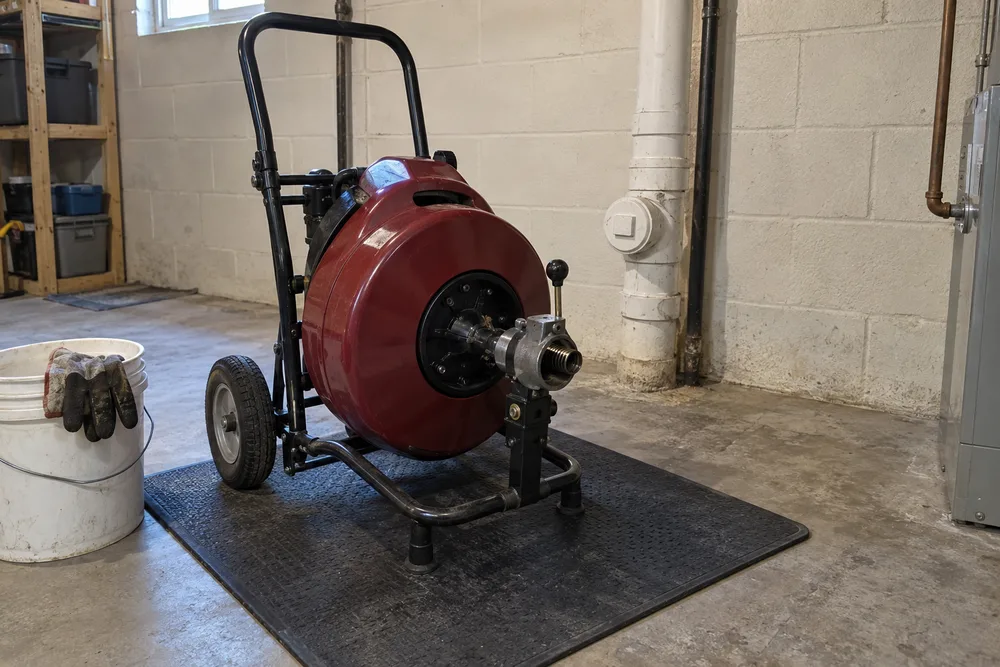
Rodding is the standard mechanical clearing approach when a sewer line is obstructed by soft buildup, wipes, paper, or some root intrusion. It uses a cable and cutting or scraping head to reopen flow. It is useful when the immediate goal is restoring drainage, not documenting every inch of pipe condition.
Jetting can be a better fit when the line needs a stronger washout of debris or sticky buildup, while a camera inspection is the better next step when you want to see what’s happening inside the line after it’s open. That’s why many calls begin with a clearing service and then move to another step only if the line’s behavior calls for it.
If the blockage appears to involve roots repeatedly, a root-specific service may be the more targeted follow-up. If the issue is only one fixture, drain cleaning for that fixture may be enough. The point is to match the work to the symptom, not to assume every sewer problem needs the same method.
- Rodding: mechanical clearing for a blocked line.
- Jetting: stronger washout when debris is stubborn or widespread.
- Camera inspection: checks pipe condition after access is restored.
- Root removal: useful when root intrusion is the likely cause.
Quick comparison
Use this short check before you book.
Water backing up now?
Pause water use and call. Emergency calls are accepted 24/7.
Service choice at a glance
| Situation | Most likely fit | Why it helps |
|---|---|---|
| Several fixtures backing up | Main sewer rodding | Clears a shared blockage in the line serving the home |
| Slow drainage with greasy buildup | Mechanical clearing or jetting | Depends on how heavy and stubborn the buildup is |
| Recurring clog after prior clearing | Rodding plus possible inspection | Helps confirm whether roots or damage are involved |
| Only one sink or tub is slow | Fixture drain cleaning | The issue may be limited to that branch line |
Questions homeowners ask
What symptoms usually point to a main sewer problem?
Multiple slow or backing-up fixtures, bubbling toilets, basement floor drain issues, or wastewater returning when another fixture runs are common signs. One slow sink by itself is less suggestive of a main line issue.
Should I keep testing drains if I think the sewer is backed up?
No. If wastewater is coming back up, pause water use and do not run fixtures to recreate the problem. That can make the backup worse and spread sewage into more areas.
Will rodding fix every sewer blockage?
No. It often clears common obstructions, but it cannot repair a broken, offset, or collapsed pipe. If the blockage returns or the line behaves oddly after clearing, inspection may be the next step.
Can a contractor tell whether the problem is on my side or the village side?
Sometimes, yes, based on where the blockage is found and how the system responds during service. Public sewer issues are different from private building line problems, so the visit may help narrow the source.
What should I say when I call for service?
Describe the fixtures affected, whether sewage is backing up, whether the problem is recurring, and whether anything changed before it started. Those details help the contractor choose the right truck, tools, and next step.
Local resources
Use these official resources for municipal or utility information. They are separate from Plumbers 911.